 |
| ©Cindy Thomson |

It is important to look to the past with clear eyes not clouded with the romantic outlook so prevalent in modern society’s love affair with all things Celtic.
The early Celtic Christians had a harsh life, even those who did not choose it as the
Skellig monks had. The world they lived in was wrought with wild animals, dangerous bogs that could swallow a traveler with one misstep, warfare and raids that could prove to be economically devastating if not deadly.
When these people spoke and wrote about hope and joy in their spiritual world, I listen. They do not exaggerate. They did not have time for idealistic nonsense. They faced hardships I might never know in my life, and they embraced a relationship with God that was not dependent on the institutional church, a concept that at first look might seem extraordinary to us today.
Edmund Burke, an 18th century Irishman, once said, “People will not look forward to posterity who never look backward to their ancestors.”
What is remarkable about these early Celtic Christians, besides their devotion and self-sacrifice, is the way they lived out their faith, shared it with others, saw God in creation and in other people. Thomas Cahill, author of
How the Irish Saved Civilization, and others like him, told the world that it was the Irish who spread their faith without bloodshed. They were so successful that that fact alone deems them worthy of study.
Like Burke said, we can learn how to move forward by first looking back. The lessons await, footsteps left by ancient Celts in manuscripts and in oral tales. How exactly did these people reach to the spiritual core of their own being in a way that so greatly affected others? That's a question I seek to answer, or at least explore, every time I write about them.
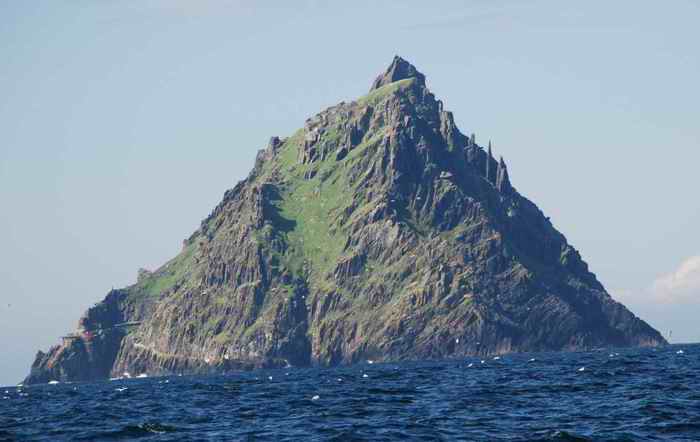


 In ages past a monk sat on a lonely stone precipice with a view of the turbulent northern waters of the Atlantic Ocean. The mainland, though only a mere eight miles away, was at most times unreachable due to poor weather conditions, and so he is isolated. He pulls his cowl tight around his head against the beating wind. Puffins and seabirds are his only companions, although he does not live on the island alone. His brothers are below him eking out a few vegetables from the bits of soil they created by hauling mounds of seaweed up the rocky slope.