Oct 19, 2006

Ninth Wave of the Sea


Photo via creative commons by Eric Neitzel
There is an ancient belief that if you count the waves at sea, the ninth one will be the most powerful. If you can defeat it and survive, then you can survive anything.

I'm not a sailor, far from it. I'm not real comfortable in a boat. But I am curious. I first learned about this from Tim Serverin's The Brendan Voyage. Actually, Severin says it's the seventh wave, but the point is the same.

I'm working on my first draft of my novel, Brendan the Navigator. I'm at a point where the crew is about to endure a frightening storm at sea, not their first, but definitely their worst.

So, I've been thinking about this ninth wave. What kind of fear must sailors feel as they count them off: five, six, seven . . . they know it's coming, the worst one yet. When it does come, they think they are going to die. But they don't give up. It's not human nature to let go and die. They fight. And once the fight is over and they've won, they know they can endure anything, even though they'd rather not face a ninth wave again.

I don't think I've hit that wave in my own life. But I'm not counting: four, five, six . . . I have a lifesaver. This is a Psalm I'm including at the start of the chapter I mentioned: "You rule over the surging sea; when its waves mount up, you still them." Psalm 89:9

Oct 13, 2006

Ask for the Ancient Paths

photo via creative commons by alex.ch

An ancient prophet declared:

This is what the LORD says:
"Stand at the crossroads and look;
ask for the ancient paths,
ask where the good way is, and walk in it,
and you will find rest for your souls."
(Jeremiah 6:16NIV)

The word "ask" really strikes me in this passage. Who do we ask? Those who went before us, I think.

Sep 29, 2006

New Reads

I'm at it again, doing lots of research and adding books to my collection.

Here are the latest:

This is a tiny book packed with lots of text, pictures, and references. I think it will be worth the price. So far, here's one phrase I've highlighted: Christianity probably first came to the Celts in the way it first came to most of the rest of the world: through informal contacts by 'everyday' Christians, most likely traders..."


I am really excited about getting into this book. The subtitle is: Rule and Writings of Early Irish Monks. The rules of the ancient monastic orders are here, as much as could be translated from centuries old documents. Things like: "Do not conceal your bodily faults when you speak to God in tears."--from The Rule of Ciaran, late 7th or 8th century. In the back are litanies and poems, which I've only just begun to look at. The poems, of course, have been translated into English, which is no small feat to make them still poetic. Here's one translated by Robin Flower:

The maker of all things,
The Lord God worship we;
Heaven white with angel's wings,
Earth and the white-waved sea.

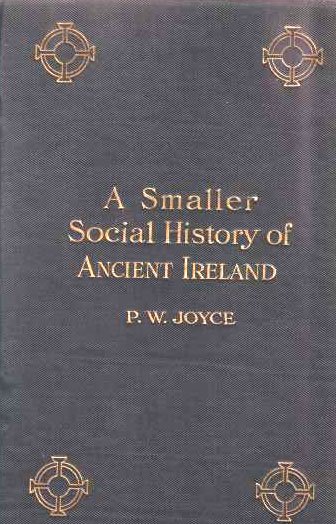
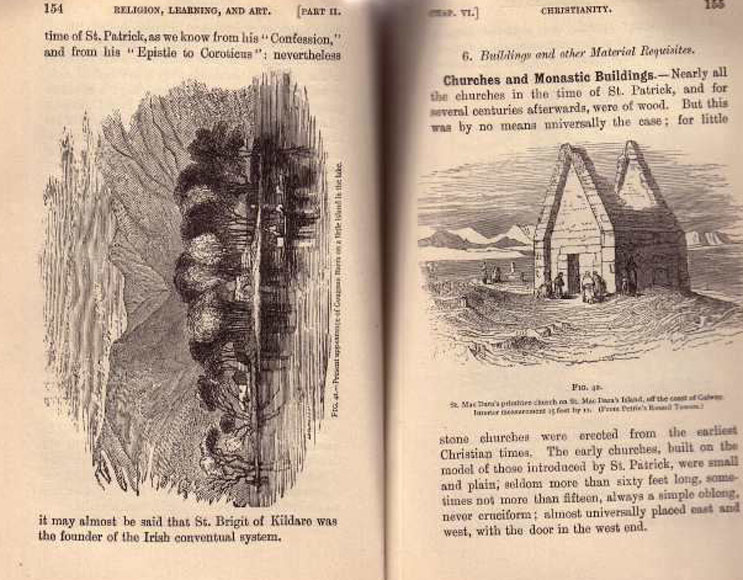
And finally, I'm really enjoying my copy of a book written a hundred years ago: A Smaller Social History of Ancient Ireland by P.W. Joyce. This has lots of good information that I can use while creating a fictional world for my novels.

Sep 22, 2006

New Monasticism part two


I picked up a copy of the Northumbria Community's book: Celtic Daily Prayer, Prayers and Readings from the Northumbria Community. The introduction, written by Richard J. Foster, helps explain the way this community is taking the old monastic rule and using it today, not by living by rigid rules and being isolated, the way the ancient monks would have, but by adjusting it for our lifestyles today. The group defines community not by communal living, but by joining together, in prayer and in commitment, to take this spiritual journey. From the intro: "These are folks who live in ordinary life, who face daily all the demands that you and I must face--demands of family and work, school and home." And speaking of the Sermon on the Mount, "For them this Sermon must never be relegated to another dispensation or viewed as utopian sayings to be admired in the abstract. Instead, this, Jesus' greatest teaching on how we are to live, is, very simply, to be lived--right in the midst of the pressures of contemporary society."

Everytime I read Matthew 5-7, there is always something new that pops out at me. This time it is the theme of worry. Not only is worry a problem for us in our everyday lives, but it's a problem for the church as well. Jesus tells us not to worry, but it's still hard not to, isn't it?

Well, that's something to think about. Another aspect that is central to this group's identity is its commitment to prayer. That's what I'll talk about next Friday, along with Esther De Waal's The Celtic Way of Prayer.